The Masques
Airport interventions · case study
One continuous arc of feeling.
Three zones of architecture that keep interrupting it.
An airport is organised around movement, efficiency and control, and contains some of the most emotionally charged moments in contemporary life. Departures, reunions, anticipation, loss, relief. The architecture makes no provision for any of them. The corridor’s job is throughput, not goodbye; so the goodbye happens anyway, badly housed, compressed into the gap between the car door and the terminal doors.
Departure, waiting and arrival appear to be separate episodes because the airport assigns them to separate zones. Emotion doesn’t recognise those boundaries. Goodbye, waiting and hello aren’t three discrete events the way check-in, security and retail are: they’re one arc, and the space breaks it, zone by zone, on the way through.
The Masques proposed interventions into all three moments. Not decoration, not wayfinding: each a choreographed encounter asking a different question of the traveller: attention, reflection, feeling.
Goodbye: the arc, mapped
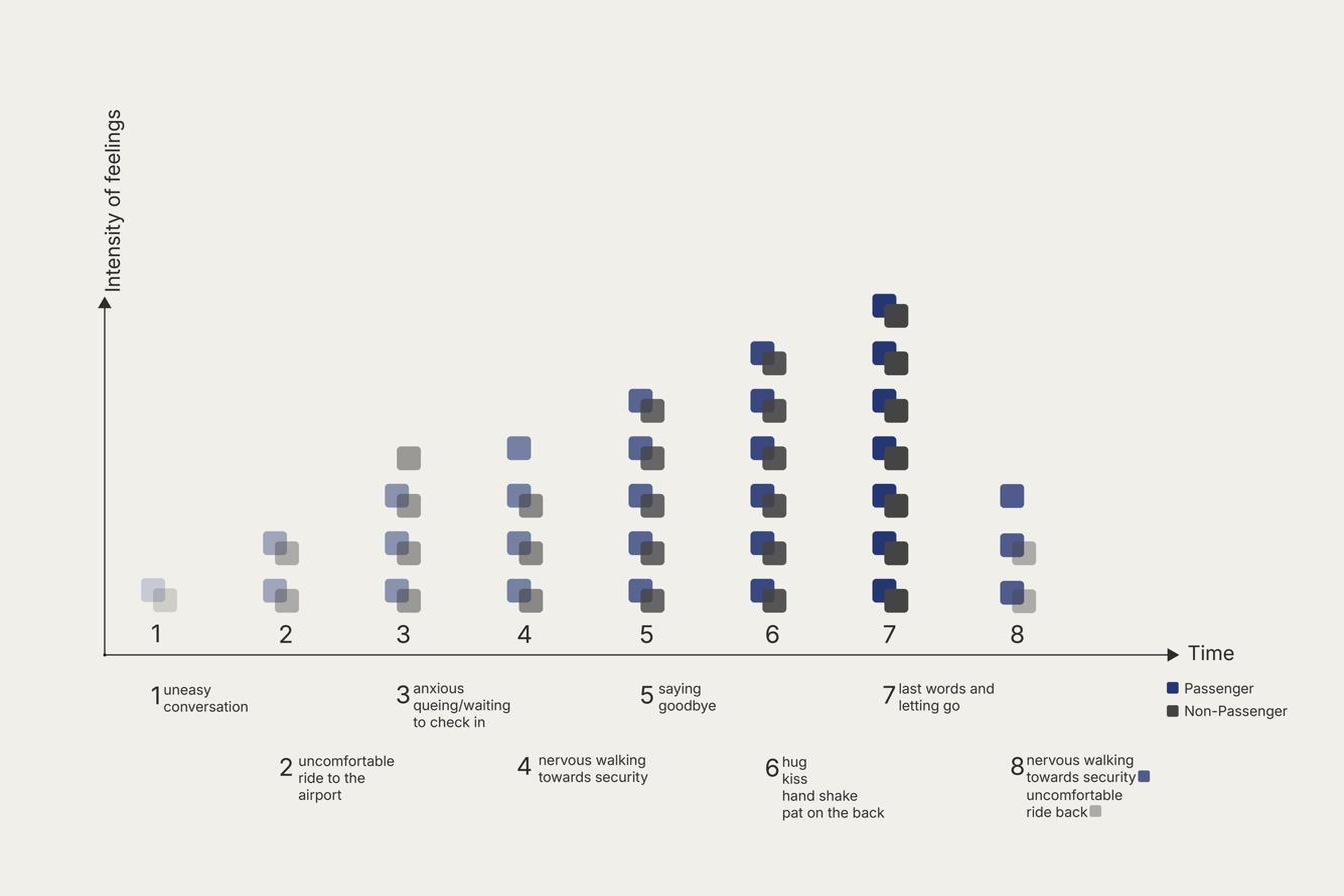
Before any form was found, the goodbye was dissected: its intensity traced over time, split into two diverging tracks. At the end of the arc one track walks on toward security; the other turns back to the car. The intervention was designed against this map, not against the floor plan.
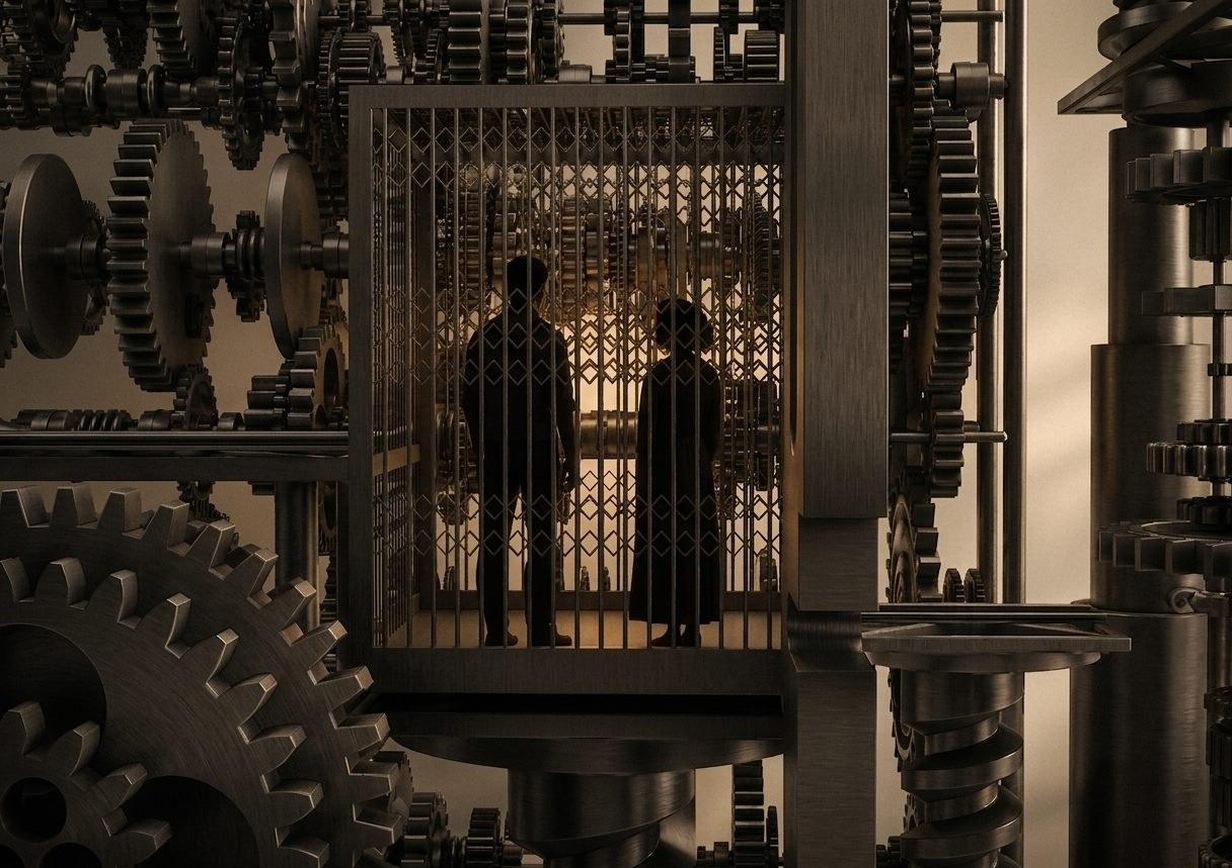
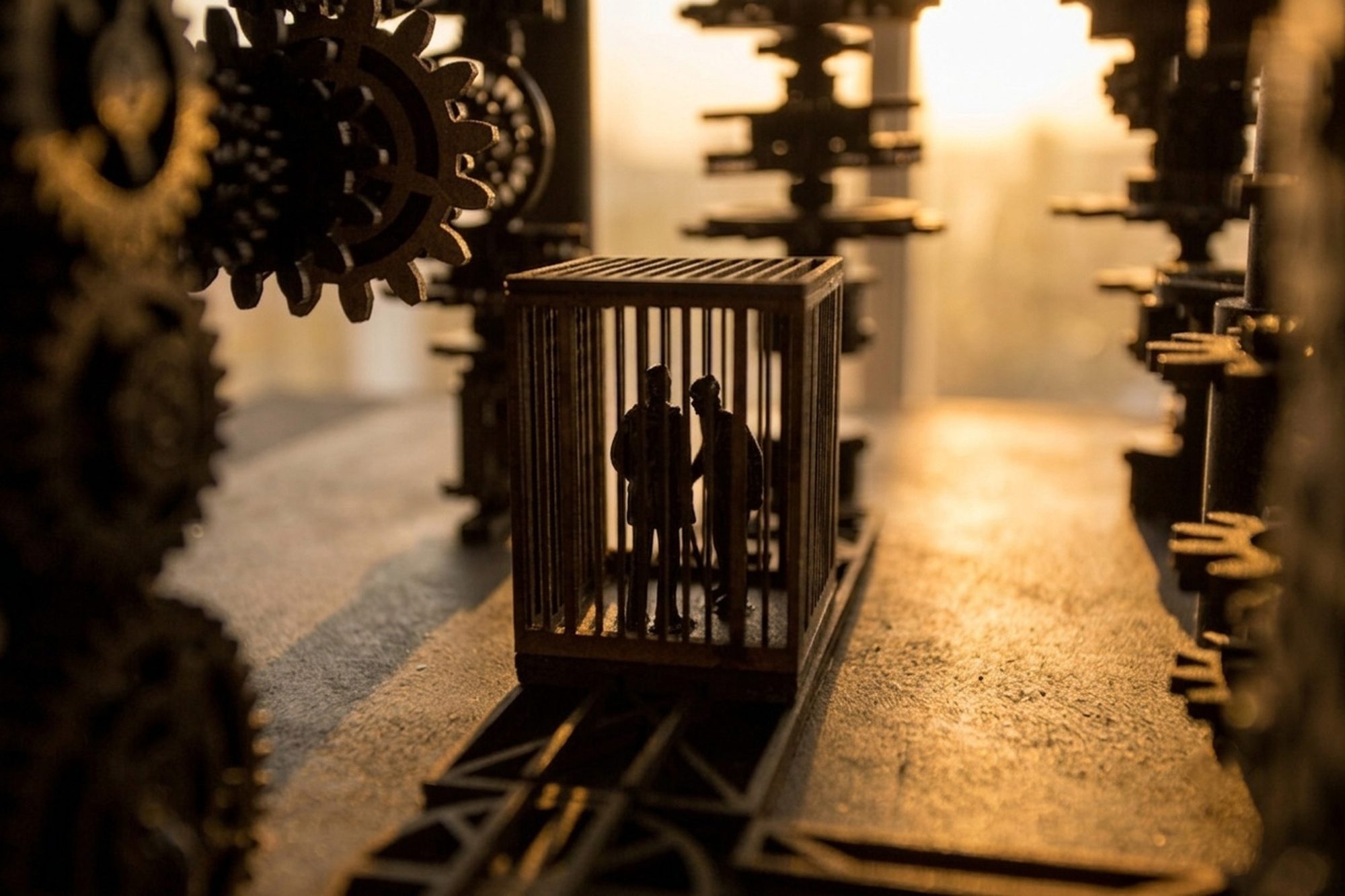
Its form came from clockwork. The masque is one vast mechanism of gears and shafts, and the goodbye happens inside it: an elevator that rises and turns through the works, carrying its passengers with it.
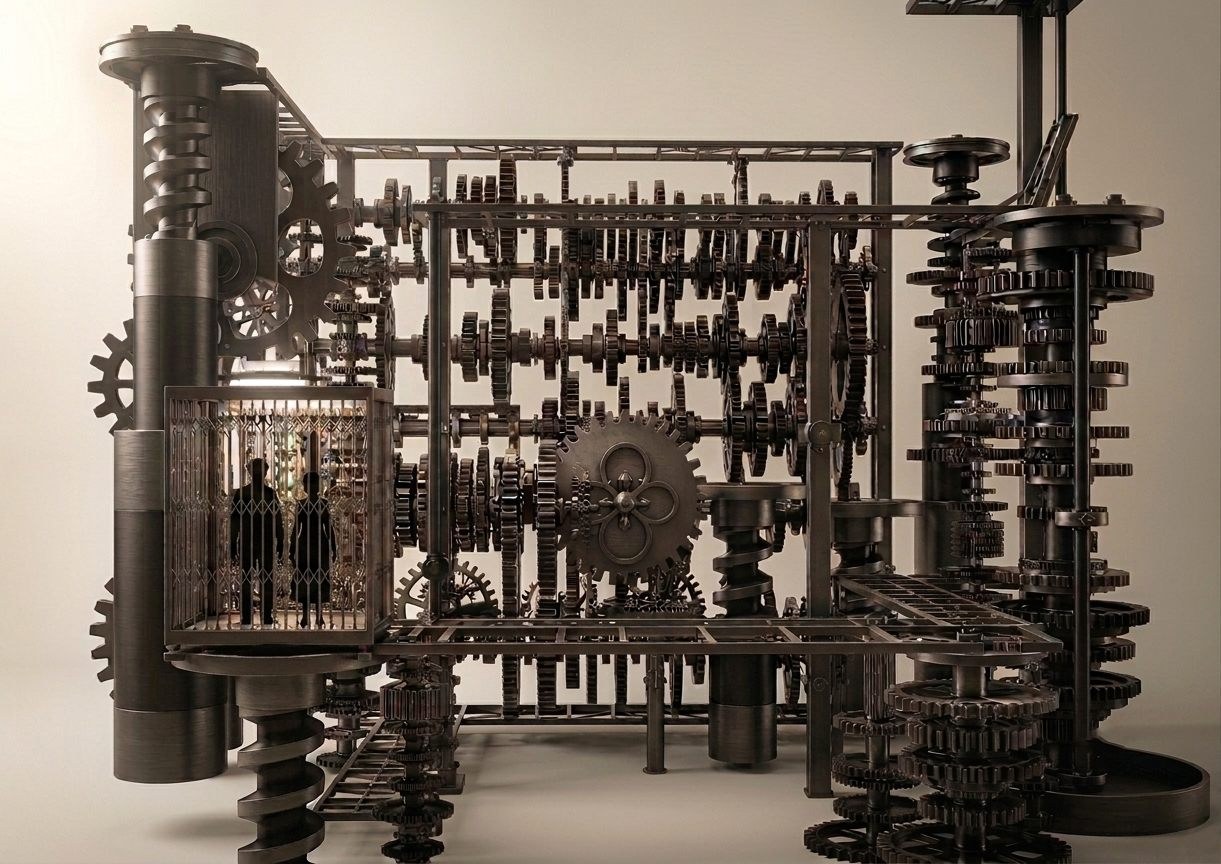
The ride offers three preset lengths: one minute forty-four, three minutes fifty, nine minutes forty. Or the passengers set their own, freezing the mechanism or looping the circuit to linger as long as they want. Either way it hands over the one duration an airport never lets you choose.
Waiting: a target state, specified
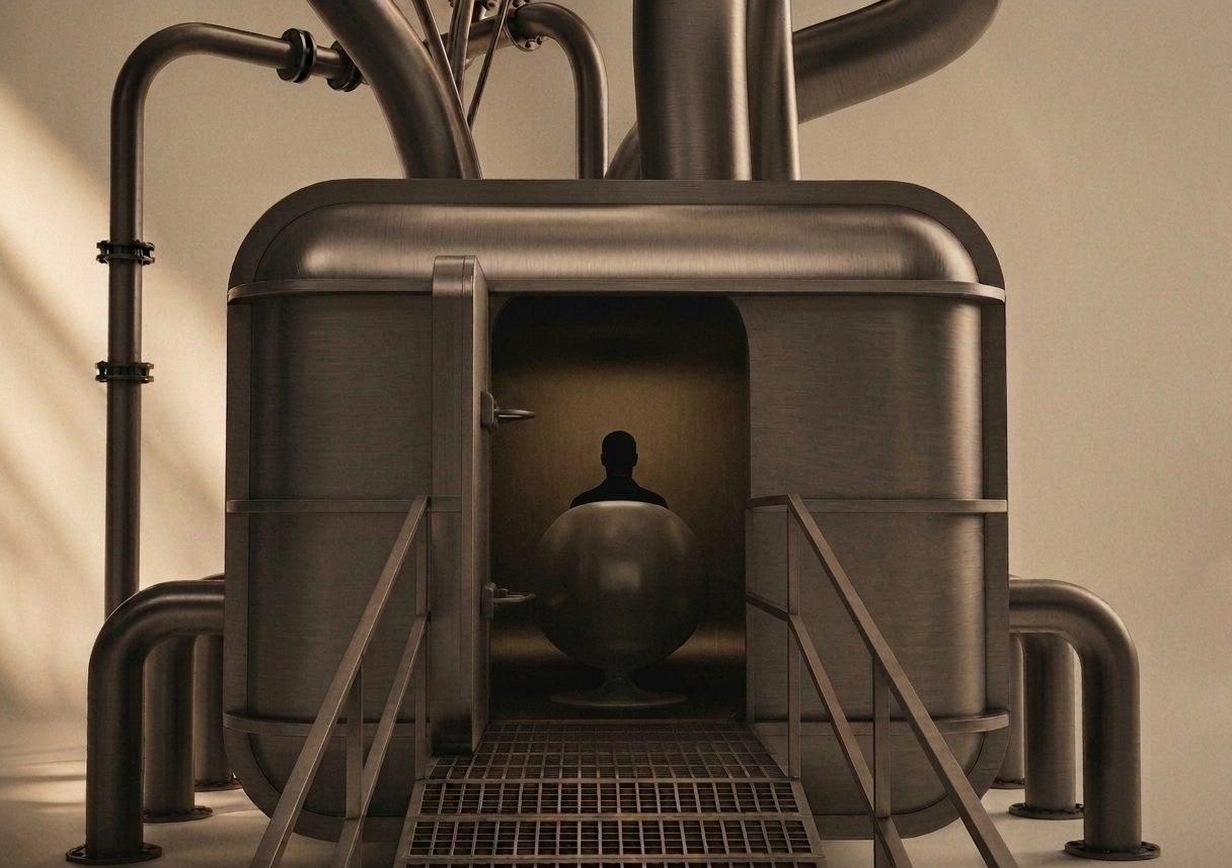
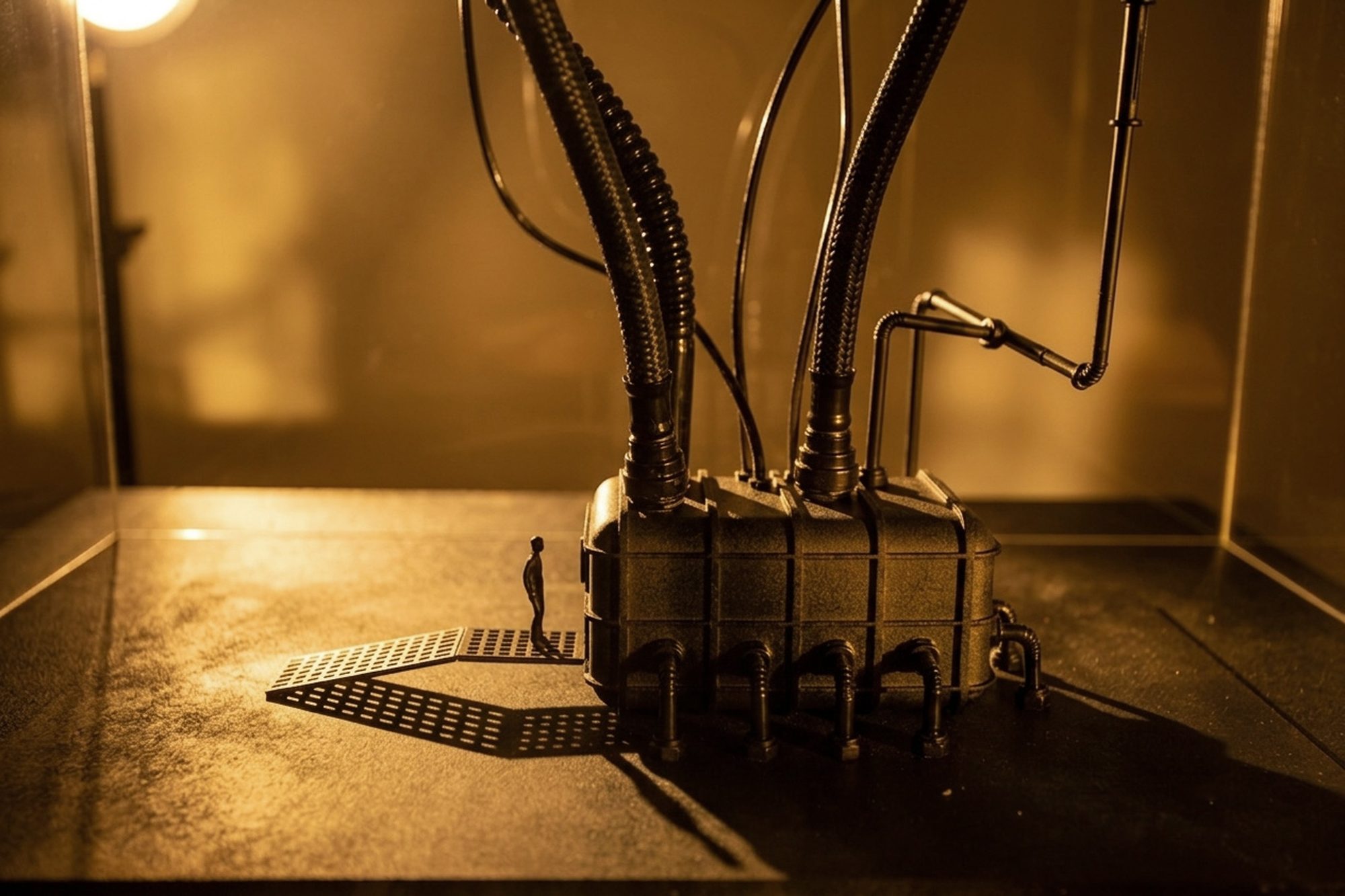
The brief was not “calm.” It was a defined perceptual state, light trance: the whole-body warmth of near-sleep, a changed sense of time, delicate and easily broken. The chamber was built to hold that state, and every parameter below was set to produce it. Emotional resonance, written as a technical specification.
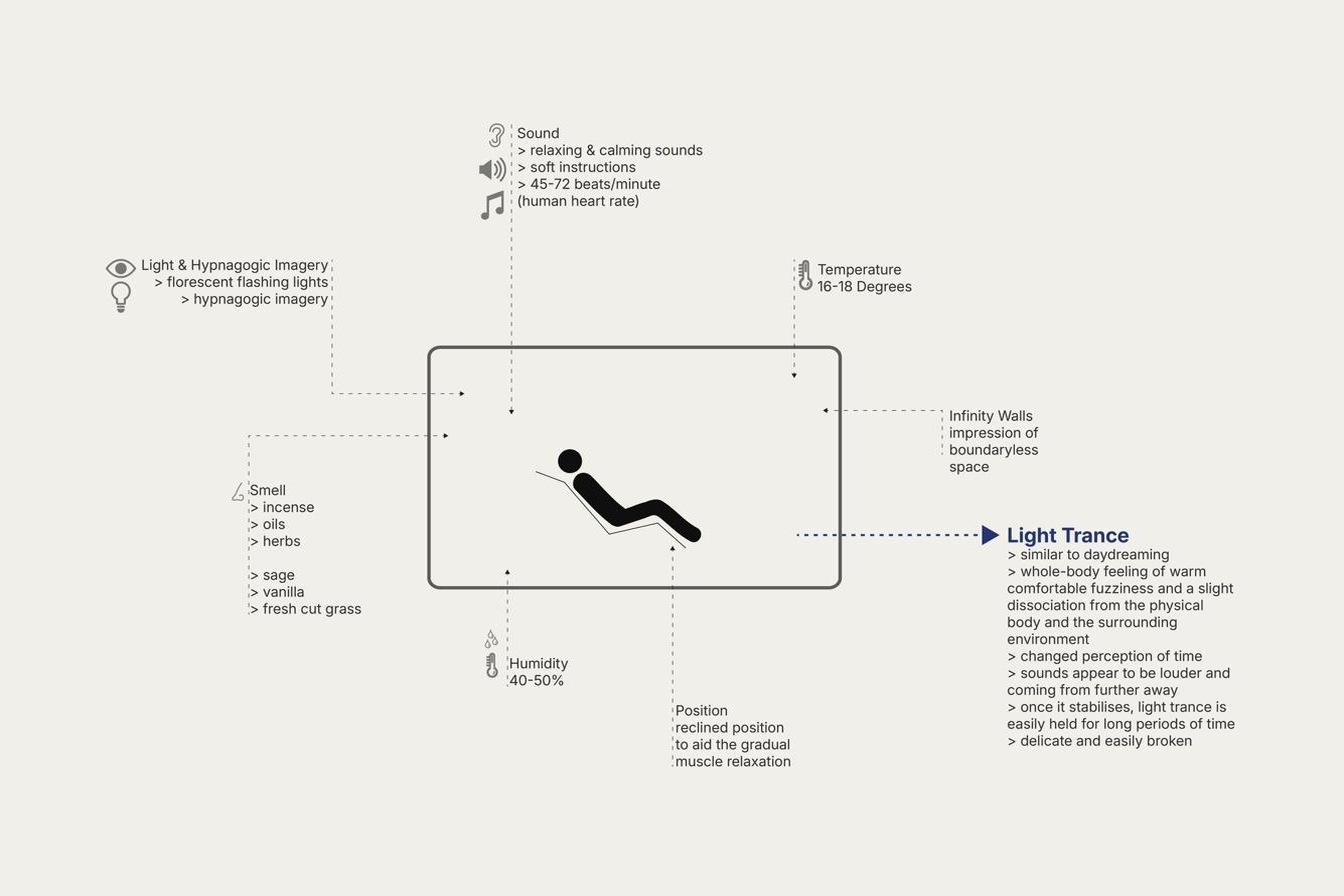
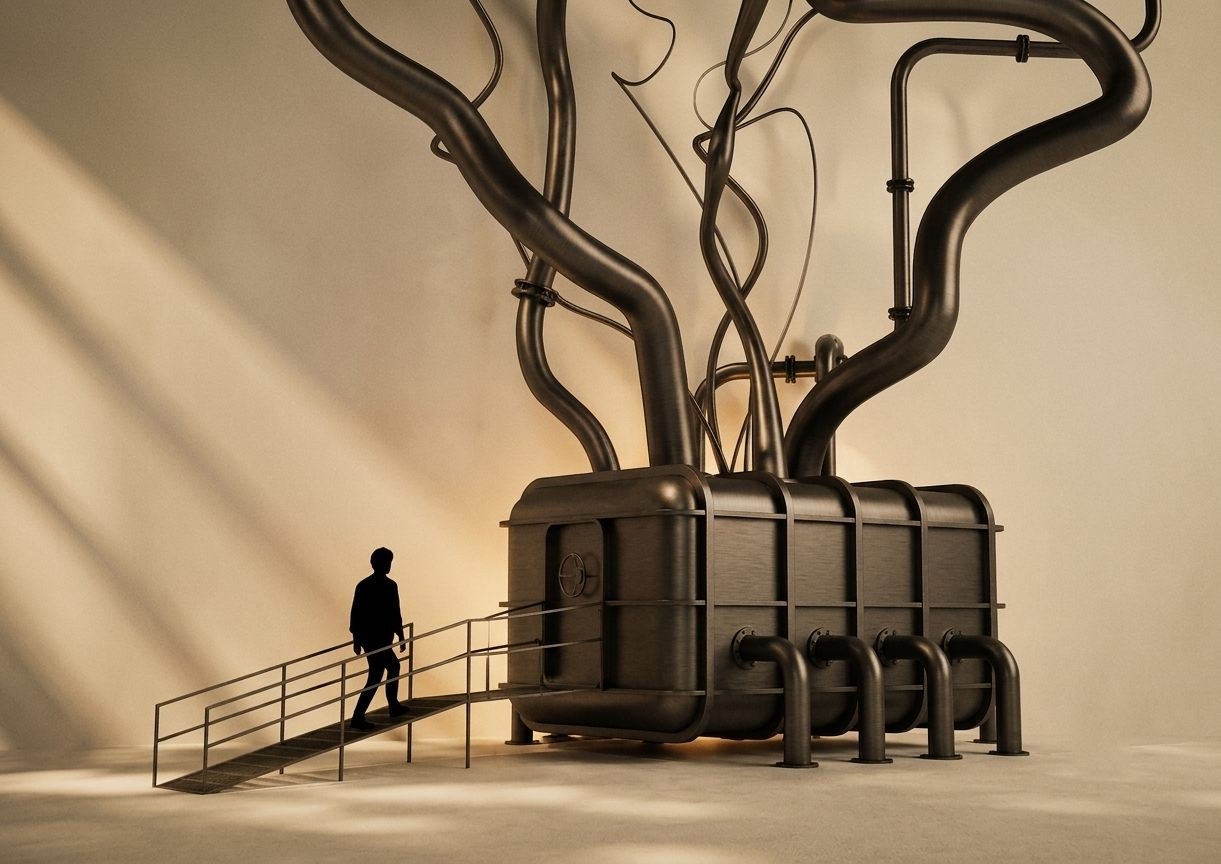
Its form came from two ancestors: the vintage barber’s chair, with its licence to recline a stranger and attend to them, and the sealed decompression chamber. The passenger steps into a pod threaded with breathing tubes, reclines, and is held inside the specification.
Hello: theatre, finally directed
Watch any Meet & Greet hall: the craning, the scanning, the small unbearable performance of waiting to be seen. It is already theatre. A feeling that large, denied a stage, builds one from whatever is lying around: a barrier, a painted line, a held sign. Theatre with no director.
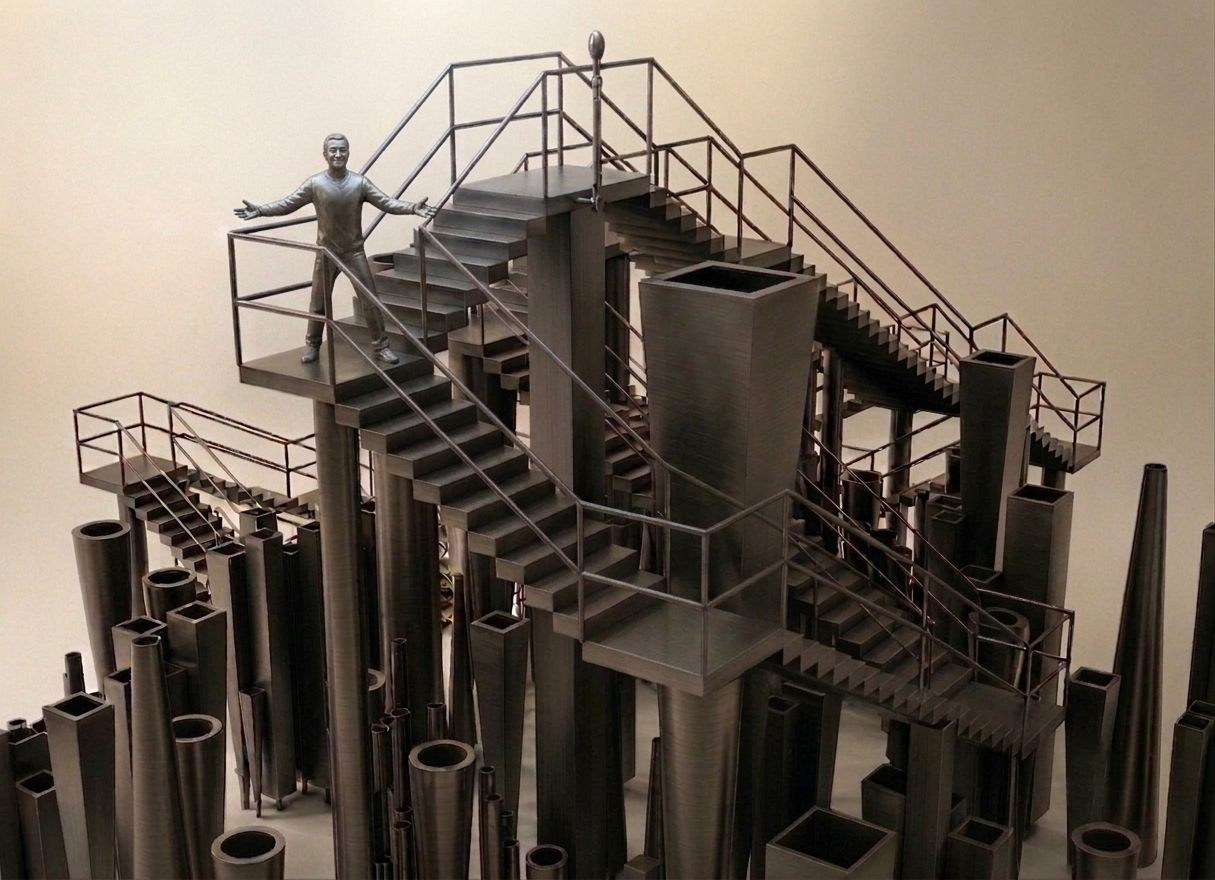
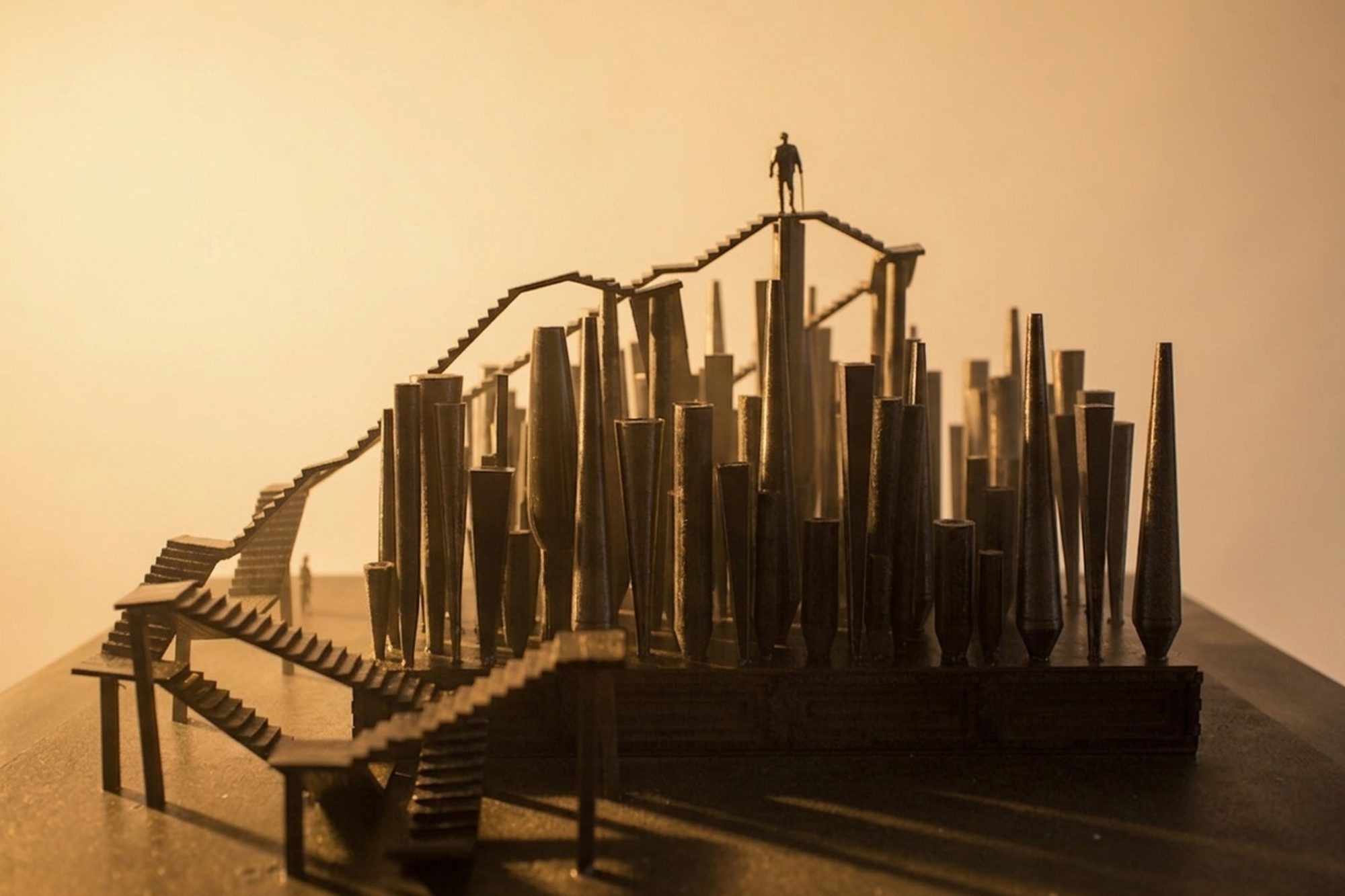
The Masque directs it, and inverts the roles the hall assigns. The greeter stops being a passive spectator kept behind a barrier; the passenger, climbing into view, becomes at once the one watched and the one performing.
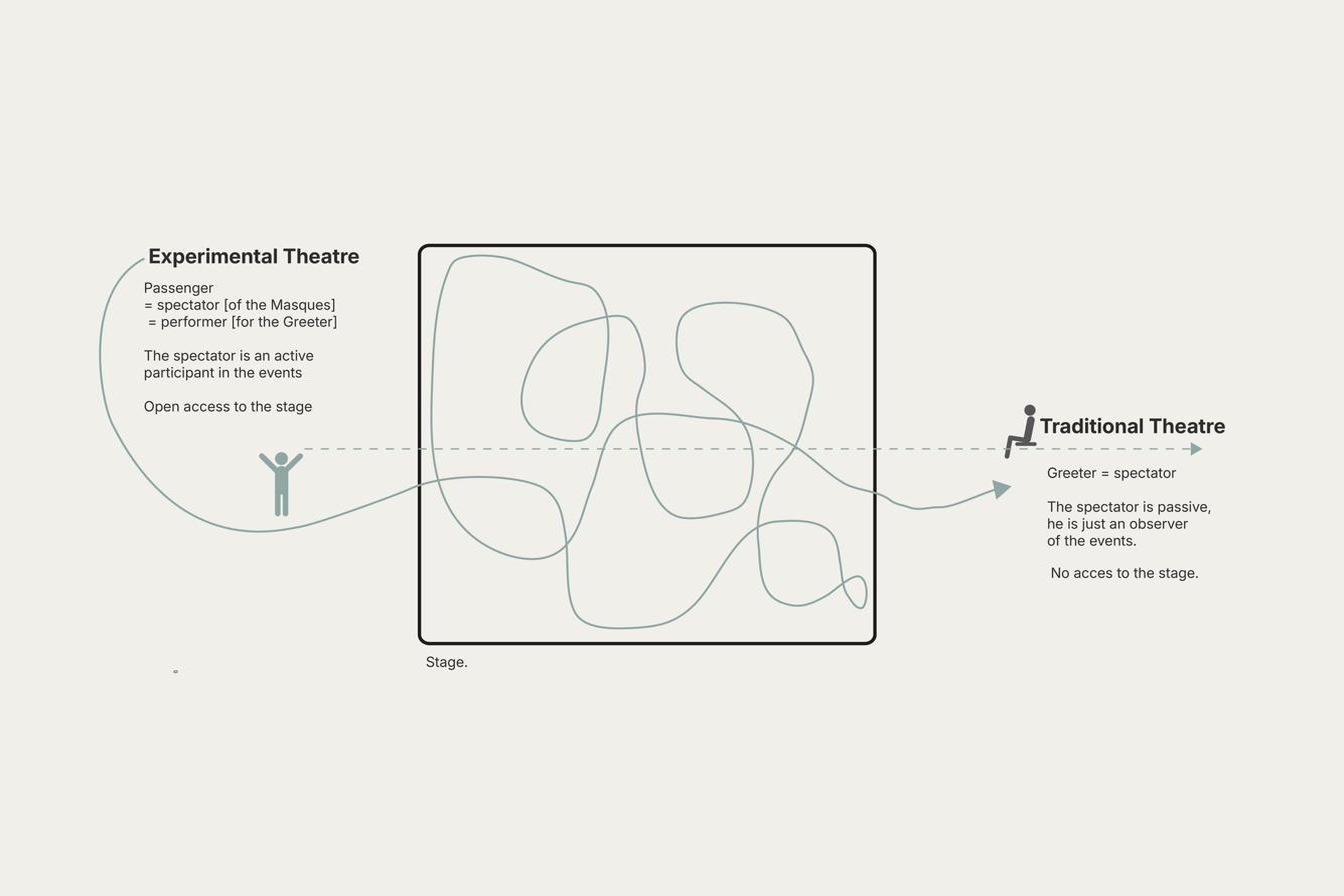
The stage took its form from a pipe organ crossed with an impossible staircase, guided by Ionesco’s Theatre of the Absurd: a sequence of events without sequence, alive with discordant passion. The passenger ascends through the pipes into the light, and the reunion is finally given a direction.
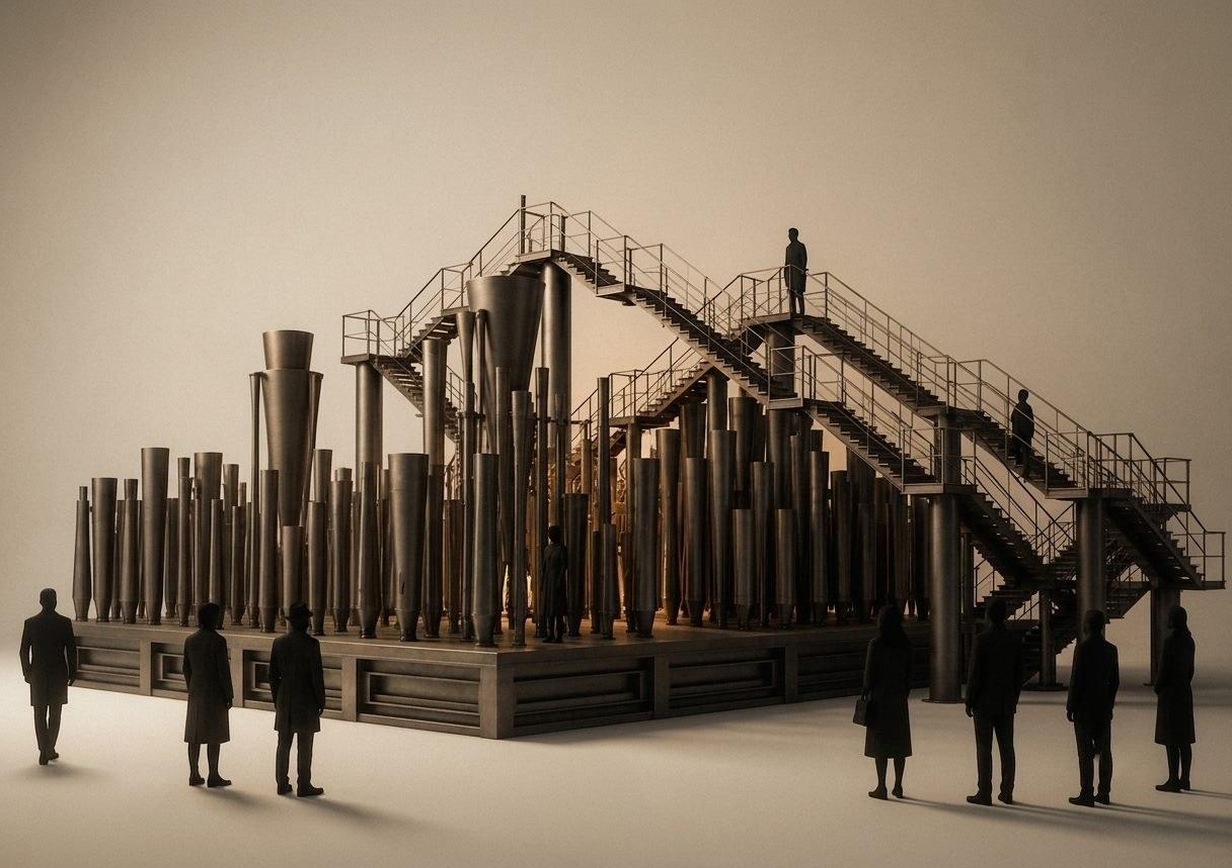
The models
Scale models of the three moments.
We have become exceptionally good at organising movement. What, exactly, is moving?
← All projects